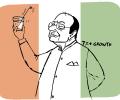
'The attempt to build a negative narrative about India's economic performance is disingenuous.' 'For the investors as well as the targeted beneficiaries of welfare schemes, the ground reality is very different,' argues Rajiv Kumar, vice-chairman, NITI Aayog.

'Maharashtra is virtually in a debt trap.'

The Sebi board on Wednesday approved a series of measures, including stricter regulatory norms for SME IPOs, a comprehensive overhaul of investment banking regulations, and an expanded definition of Unpublished Price Sensitive Information (UPSI). Also, the board approved reforms to boost ease of doing business for Debenture Trustees, ESG rating providers, InvITs, REITs, and SM REITs.
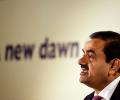
Hindenburg Research, the forensic financial firm that challenged the Adani Group, took its name from the infamous airship that burst into flames upon arriving in New Jersey in 1937. And the counter to its damning report against the conglomerate was dubbed 'Operation Zeppelin,' named after the German dirigible airships used for reconnaissance and bombing during the First World War.

Indian economy to grow at 6.3-6.8 pc in FY26, against 6.4 pc in FY25

India and the US are expected to have smooth trade negotiations after US President Donald Trump and Indian Prime Minister Narendra Modi had a productive meeting during Modi's visit to the White House last month, Stephen A Schwarzman, chairman, chief executive officer, and co-founder of one of the world's largest alternative investment firms, Blackstone Group, said in Mumbai on Wednesday.

Post-election capital expenditure (capex) has been weak at 2 per cent year-on-year (Y-o-Y) in M9FY25. The FY25 revised estimates (RE) indicate 7 per cent growth in FY25 against FY24, implying 21 per cent Y-o-Y growth in Q4FY25 government capex.
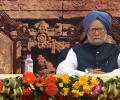
'He will be remembered more for what he did as finance minister -- as someone who functioned well when the political fallout was taken care of.'
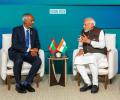
President Mohamed Muizzu, known for his pro-China stance, has thanked India for enabling the resumption of medical evacuation services with civilian aviation personnel from India.

'The finance minister missed yet another opportunity to simplify the income tax structure in the Budget.' 'This was an opportune moment to get rid of the old tax system entirely and move fully to the new system,' asserts M Govinda Rao, member of the 14th Finance Commission.

A key hindrance to a faster turnaround of these banks is the slow progress in the resolution of legacy bad loans and the need to build up provisions against those assets.

Reliance Industries, construction major L&T and IRB Infrastructure are some of the top companies that have used an infrastructure investment trust structure to reduce part of their debt and generate returns for their investors. Earlier this month, IRB Infrastructure InvIT was listed on the National Stock Exchange, giving its investors an option to exit by selling their units. The listing came within months of the Securities and Exchange Board of India's (Sebi's) guidelines for conversion of private unlisted InvITs into listed ones were issued.

Fund mobilisation by companies through equity and debt routes has dropped 20 per cent in 2022 to nearly Rs 11 lakh crore, as exuberance dwindled this year due to expensive credit avenues and volatile markets. The first half of 2023 could continue to remain challenging. The year 2021 was extraordinary for fundraising from the equity and debt routes, while 2022 has seen a slowdown in capital raising owing to elevated volatility provoked by unprecedented inflation globally and the Russia-Ukraine war.

On the basis of her committee's report, the UCC in Uttarakhand established mandatory registration for marriages and live-in relationships, banned polygamy, and provided equal inheritance rights for women.

There is nothing wrong with government and RBI having conflicting opinions.

Fundraising momentum is expected to accelerate further in the New Year, potentially surpassing 2024's record figures

Despite the tragic terror attack in Pahalgam, Kashmir, locals demonstrated incredible bravery and compassion, risking their own lives to save tourists. Syed Adil Hussain Shah, a pony 'wallah', was killed while protecting tourists from the gunmen, while Nazakat Ahmed Shah rescued a family of 11, including three children. Tourist guide Sajad Ahmad Bhat also carried injured people to the hospital. The attack, which claimed the lives of 26 people, mostly tourists, highlighted the resilience and kindness of the Kashmiri people.

This will be the first full-year Budget of the BJP-led National Democratic Alliance government since it came to power for a third consecutive term in July last year.

Perhaps the finance ministry or NITI Aayog could take a detailed look at what governments actually deliver and at what cost; how their services can be improved and expanded where necessary; how much money can be saved through doing things differently; and how many things the government does which it can safely leave to the private sector, argues T N Ninan.

The stocks are largely from sectors such as chemicals, finance and cement, which struggled earlier but the worse seems to be behind them.

Food delivery app Swiggy on Wednesday launched a Rs 11,330-crore initial share sale, asking investors to take a pie of Indian middle class' rising propensity of online ordering. The company, which is present in over 650 cities and towns of the country, is launching the initial public offering (IPO) amid heightened concerns on urban demand slump, and the management stressed that it is unaffected by the broader trends in the economy. "We are also reading about it, but we are not seeing that yet in the business... So far, we have not seen the impact of demand on our business," its chief financial officer Rahul Bothra said.

The IPO market is set to be bustling next week, with 11 companies like Vishal Mega Mart, TPG Capital-backed Sai Life Sciences and fintech firm One Mobikwik Systems gearing up to launch their initial share sales, collectively aiming to raise nearly Rs 18,500 crore. Other mainboard IPOs to be launched during this period are Inventurus Knowledge Solutions Ltd and Blackstone-owned diamond grading firm International Gemmological Institute (India) Ltd.

Budget 2025-26 delivers a carefully calibrated strategy-stimulating demand and investment while keeping fiscal discipline intact. In an environment marked by global trade disruptions, and a softening in urban consumption, Finance Minister Nirmala Sitharaman has taken a measured approach.
The answer depends on your financial goals and risk appetite, says Certified Financial Planner Ramalingam Kalirajan, and explains why.

Equity-focused schemes may perform better in a bull market, while debt-oriented ones may offer greater stability during volatile periods.

Nimisha Priya, an Indian nurse sentenced to death in Yemen for the alleged murder of a Yemeni national, faces imminent execution despite the payment of blood money. Despite the lack of bilateral ties between India and war-torn Yemen, family members and human rights activists are clinging to hope for a last-minute pardon. The family has raised funds through a crowdfunding campaign to cover legal fees and negotiations, and is prepared to pay any additional amount required. However, the execution order received presidential approval despite ongoing proceedings, leaving little time for intervention. Priya's family is burdened by debt and seeks urgent support from the Indian government to save her life.

Finance Minister Arun Jaitley on Wednesday said it was responsibility of banks to ensure no defaulter manages to get away.

Some of the key proposals of the agenda relate to transforming the banking sector, addressing agrarian distress, countering hate crimes and discrimination, and spurring employment generation.
S&P Global Ratings on Wednesday upgraded India's sovereign rating outlook to positive from stable while retaining the rating at 'BBB-' on robust growth and improved quality of government expenditure. S&P said it could upgrade India's sovereign rating in the next 2 years if the country adopts a cautious fiscal and monetary policy that diminishes the government's elevated debt and interest burden while bolstering economic resilience.

Eying benefits from digital banking, lenders are now looking at building Unified Recovery Interface (URI) for enhancing efficiency, reducing costs, and getting good prices for properties of defaulters. This would be managed by PSB Alliance Ltd, a company set up by all public sector banks in the country. M V Rao, chairman, Indian Banks' Association (IBA), said: "Till now we had Unified Payments Interface (UPI), a product developed by National Payments Corporation Ltd (NPCI).

However, finding the funds to fulfill them will be a herculean task.

Sebi on Monday barred Franklin Templeton AMC from launching any new debt scheme for two years and fined it Rs 5 crore for violating regulatory norms in the case of winding up of six debt schemes in 2020. Also, it has been asked to refund investment management and advisory fees to the tune of Rs 512 crore, including interest, collected with respect to the six debt schemes, Sebi said in its 100-page order. In a separate order, the regulator has barred Vivek Kudva, former head of Asia Pacific (APAC) for Franklin Templeton, and his wife Roopa from the securities market for one year for redeeming units of Franklin Templeton MF schemes while in possession of non-public information.
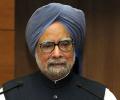
Singh, who opened up the economy as finance minister and served as prime minister for two consecutive terms, died on Thursday at the age of 92. "History will forever honour his pivotal role in the transformative 1991 reforms that reshaped India and opened its doors to the world.

Without bringing sound governance and technical capabilities into the RBI's work, injecting new money sets the stage for a next wave of bad behaviour by banks, warns Ajay Shah.

Making a case for an optimal fiscal stance, the Economic Survey on Friday said growth leads to debt sustainability and not necessarily vice-versa. "This is because debt sustainability depends on the 'Interest Rate Growth Rate Differential' (IRGD) i.e. the difference between the interest rate and the growth rate in an economy. "With the Indian context of potential high growth, the interest rate on debt paid by the Indian government has been less than India's growth rate by norm, not by exception," it said.

Union Finance Minister Nirmala Sitharaman, along with her team of bureaucrats, delved into the fine print of the 2024-25 Budget documents in a press conference, detailing the government's road map on bringing down the debt-to-GDP ratio and bold tax measures.

Fitch Ratings on Tuesday said the FY25 Budget demonstrated the government's ongoing commitment to reducing fiscal deficit and ensured policy continuity during the NDA government's new term. Finance Minister Nirmala Sitharaman on Tuesday presented the first Budget of the Modi 3.0 government in which she revised the deficit target for current fiscal lower to 4.9 per cent of the GDP, from 5.1 per cent projected in the interim Budget.

The primary market is expected to remain vibrant, with at least 10 companies, including supermart major Vishal Mega Mart and Blackstone-owned diamond grading firm International Gemmological Institute (India) Ltd expected to raise a combined Rs 20,000 crore in the next month, merchant bankers said. Education-focused NBFC Avanse Financial Services, TPG Capital-backed Sai Life Sciences, hospital chain operator Paras Healthcare, and investment bank DAM Capital Advisors are also among the companies planning to launch their IPOs in December, they added. The companies aim to raise a total of Rs 20,000 crore through their public offerings.

India's economy is not like Western ones, and thus needs restrained fiscal policy even during a recession, says Ajay Shah.

US lenders represented by Glas Trust have countered Byju's founder Byju Raveendran's claim on verified debt on the company being merely around Rs 20 crore, and have said that the beleaguered edtech firm will have to pay the entire $1.2 billion Term Loan B along with interest. The founder of Think and Learn (TLPL) and owner of Byju's brand, Byju Raveendran, had about a week ago said that verified debt on the company is only Rs 20 crore as per insolvency proceedings and he may not have to pay any money to the US lenders represented by Glas Trust.
